
It’s been a while since I posted. I accepted a full-time job as a full-stack developer with an agency last May, and it’s been a whirlwind experience ever since. Mostly good, but also a sense of mourning, leaving behind the life of a freelancer that gave me so much time to grow, learn new things, and set my daily schedule. I decided to re-read Brent Gleeson’s Embrace the Suck, and honestly, it has opened my eyes again.
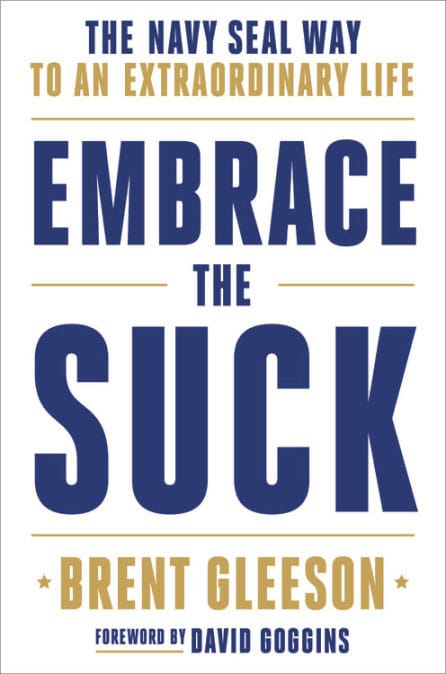
I first read Embrace the Suck years ago, when I was a freelancer. At that time, my professional world was one I had designed from the ground up; I had the luxury of time to act as the architect, deconstructing every problem to its core and building proactive, high-fidelity solutions. Revisiting the book now, nearly a year into a day job that moves at a much higher velocity, has been an eye-opening experience. I’m not writing this as someone who has fully “conquered” the mindset, but as someone still in progress, learning to navigate the friction between long-term strategy and immediate, reactive needs.
The “suck” I’m currently navigating is the transition from building blueprints to managing a high-frequency workflow. For someone who thrives on being proactive, the shift to a reactive environment has required significant recalibration. There are moments when I hit a wall, like with a recent Docker issue, and the discipline lies not just in solving the technical problem but in knowing when to hand off a task because the mission requires a pivot to something more urgent. I’ve realized that I’m not losing my ability to be an architect; I’m learning a new skill set: delivering tactical, “battle-ready” solutions in real time.
My biggest internal hurdle is the fear of “forced mediocrity.” I worry that if I spend too much time operating reactively to meet deadlines or budgets, the learner in me might begin to atrophy. I’ve always wanted to build things that last, and Gleeson’s focus on Objective-Focused Discipline is helping me reframe that frustration. He argues that the callous forms are where the friction is greatest. Right now, my growth isn’t coming from the deep dives I used to love; it’s coming from the discipline required to deliver excellence within a truncated process.
As I look toward my one-year anniversary in June, I’m realizing that my personal “Hell Week” is about maintaining my internal standards while adapting to a different professional rhythm. I haven’t fully embraced the pace yet. I still find myself needing to step away for a walk to clear the noise and reset my focus, but I’m staying in the arena. I’m using Gleeson’s framework to find a way to be surgical and decisive, even when the environment feels chaotic. I’m still an architect at heart, but I’m working toward becoming a strategist who can be just as lethal in the short game as I am in the deep dive.
I’m not there yet, I’m certainly not at peace with playing firefighter all the time with client “emergencies”, but I’m staying in the arena. I’m just a strategist trying to figure out how to keep my architect’s heart alive while I’m forced to hold the hose.
Has anyone else navigated that transition from the freedom of freelancing to the high-velocity of agency life? I’d love to hear how you keep your edge.
Leave a Reply